Reluctantly, I drove this morning to Zen Hospice. The sight of red poppies in full bloom, and the gorgeous sunshine were calling me to spend the day outside instead. Oh! hiking in the hills, if only . . . Why did I agree to a Sunday shift?
I had plenty of time during the drive, to sit with the annoyance, and the wishing. And then, amidst the unpleasantness, the thought of the people I was about to visit. A big wave of compassion washed over me, at once. And gratitude also, for my good fortune. Unlike the residents at Zen Hospice, I have the ability to walk and drive as I please. I am not stuck to a bed with no view, and I can go out and enjoy the red poppies. How blessed!
Most surprising to me, is the grace with which most residents of Zen Hospice accept their condition. I have much to learn from them . . .
Last Thursday was our last day of MBSR teacher practicum training with Bob Stahl. To celebrate, Bob took us out to dinner to his favorite vegan restaurant in Mountain View. Ten weeks we had been together, and now we had to part. The mood was bittersweet, and we swore to keep in touch, and reunite soon for more practice sessions in each other's homes. I was most struck by the tales of personal transformation, shared by all around the table, many of them psychotherapists with years of personal work and professional experience under their belt. I had witnessed similar testimonials throughout our weeks, participating in the larger group with the 'regular' folks. And I wondered, what are the ingredients in the MBSR elixir that make it so potent?
By no means a complete list, here are the 10 key ingredients I found as I deconstructed my experience, both as a MBSR group participant, and teacher trainee:
Mindfulness practice - formal and informal
Loving kindness, and radical acceptance
Teacher's modeling of essential qualities of equanimity, unconditional love, effort, and humor
Group process - normalizing, universality, and support
Integration of body and mind, including mindful movement practices such as yoga, qigong, and walking
Mindful inquiry - combining mindfulness with investigation, for liberating insights
Cognitive behavioral therapy - as in systematic tracking of one's thoughts and behaviors outside of group meetings
Rituals, as in ringing of bell after each sitting, dimming of lights before sittings, and group sharing
Imagination - engaging through sharing of poems, metaphors, and role plays
Participants empowered to take responsibility for their own healing
So powerful.
Which brings up another question. Why isn't MBSR use more prevalent? Currently, MBSR is mostly practiced in hospitals, as part of health education. Participants are usually referred by their doctors, as a result of chronic pain, or life threatening illness diagnosis, or difficulties with dealing with stress, or anxiety, or depression. So far, attempts to use MBSR outside of healthcare settings have been scant. Yet, its applications outside of the limited realm of healthcare, are obvious. One area in particular, is the corporate arena. Google, is taking the lead, once more.
Meng Tan has taken upon himself to introduce MBSR to his fellow Googlers, as part of Google's Search Inside Yourself initiative. I am interested in pursuing that lead, and exploring ways that mindfulness, and MBSR in particular, can be used, by itself, or in combination with other self-actualizing tools*, to foster greater creativity, productivity and happiness in the workplace.
* I am thinking art therapy, and other forms of creative expression :)
Trapped by my own clinging to the sweet honey of 'doing'. I have been working too much lately, and my body is on a roll. Stomach in a knot, throat and jaws, tight, shoulders high, heat rising to the head. I could feel the suffering from the clinging. Such a clear connection.
Patiently, I sat. Sensing. Breathing. Investigating. Fully knowing that I was not to add yet another craving, as in wanting the release from the clinging.
Instead, holding the moment, tension and all, with great gentleness.
Last night, was IMC (Insight Meditation Center) monthly board meeting. As usual, we started with a few minutes of meditation. Taking the time to check in with ourselves, and get centered. Thoughts, emotions, sliding by the way side, until breath made itself felt. When the bell rang, there was only silence, and openness.
I am aware of a few other settings with such practice. Zen Hospice for one, where we start, and end all our shifts with meditation. At Wisdom 2.0, Tami Simon shared how she has made it a part of the Sounds True culture. Other presenters there, including Gopi Kallayil, a Group Marketing Manager at Google talked about running all his work meetings that way as well. I have also heard of schools that have adopted the Mindfulness in Education curriculum.
This got me thinking. Imagine a world where every meeting started like this. In families, in the workplace, in schools, in places of worship, in hospitals, in the courts, at world leaders' summits, in the Senate, . . . Imagine what would happen.
In the spirit of Wisdom 2.0, and for lack of a better alternative, I would like to coin the new term 'Mindfulness-Based Social Media', or MBSM, to refer to the delivery of mindfulness related content, through online social interactions that adhere to mindfulness-based principles of communication and practice. Mindful communication means not misrepresenting the truth, not engaging in communication that divides people, not hurting other people, refraining from idle chatter, communicating at the right time, and on a more positive note, communicating in ways that are trustworthy, harmonious, comforting, and worth taking to heart. Mindful practice refers to the wise use of social media, to further promote one's own practice, as well as others' practice of mindfulness, and being especially careful to not fall into danger of addiction. A working definition, that is open to further refinements, and wordsmithing . . .
MBSM is about content, delivery, and form. The content includes all online material to do with the pursuit and exploration of mindfulness, including the Buddhist teachings on, and practice of mindfulness, also the applications of neuroscience to mindfulness, MBSR (Mindfulness-Based Stress Reduction), MBCT (Mindfulness-Based Cognitive Therapy), MBP (Mindfulness-Based Psychotherapy), Mindfulness-Based Relapse Prevention, etc . . . The delivery takes place through the various existing social media channels, including blogs, Twitter, wikis, Facebook, YouTube, LinkedIn, Flickr, Yahoo Groups, Ning and other social networks, forums, bulletin boards, etc . . . The form elaborates on the Buddhist precept of right speech, and also the mindful use of social media for personal benefit.
I would love to hear your take on this first attempt. Can you think of another term? A better definition?
Meanwhile, let me share all the links on Mind Deep blog, with some relevance to the topic:
Eric leaves us with these words, as we are about to head home, after our weekly, five hour shift at Zen Hospice.
The sixth hour, means taking one hour just for ourselves, before we transition back into our daily lives. Today, I went for a long walk, part walking meditation, part listening to a dharma talk on my iPhone.
For those of you engaged in service, what is your version of the sixth hour? How do you take care of yourselves? Do you always find the time? If not, what gets in the way?
I have become rather fond of the term 'unskillful'. It assumes being kind and loving, is a skill that can be learned. Lots of hope there . . . It also helps in relating with those not blessed with the skills of right speech and right acting. When confronted with such a person, I now think, oh! he (or she) suffers from wrong speech, and does not know any better. And I end up feeling for him, and wishing him well.
Welcome to Mind Deep, a mindfulness practice blog and online community. Here, you will find answers to such questions as: what is it really like to practice mindfulness meditation? how can mindfulness practice help with stress, depression, chronic pain, dementia care, end-of-life, and other psychological problems? You may participate by leaving comments at the end of each post.
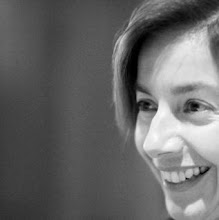
Marguerite Manteau-Rao
Student of mindfulness meditation. Founder of Presence Care Project, a new mindfulness-based approach to dementia care. Author, 'Caring for a Loved One with Dementia: A Mindfulness-Based Guide for Reducing Stress and Making the Best of Your Journey Together' (New Harbinger). Huffington Post contributor. Neuroscience and dementia care hacker at Neurocern, a software startup.



 Posts
Posts

